 Esperanto
 Shqiptare
 Euskara
 Zulu
 Latinus
 Cymraeg
 தமிழ்
 Slovak
 Slovak
 Afrikaans

News Center
How are microwaves used in telecommunications?
Publish:
2023-06-28 18:08
Source:
www.premier-cable.net
Microwaves are widely used for point-to-point communications because their small wavelengths allow appropriately sized antennas to direct them in narrow beams that can be pointed directly at receiving antennas. This allows nearby microwave devices to use the same frequency without interfering with each other like low-frequency radio waves do. This frequency reuse saves scarce radio spectrum bandwidth. Another advantage of microwaves is their high frequency, which makes the microwave band have a very large information-carrying capacity; the bandwidth of the microwave band is 30 times that of the radio spectrum below it. The downside is that microwaves are limited to line-of-sight propagation; they cannot go around hills or mountains like low-frequency radio waves can.
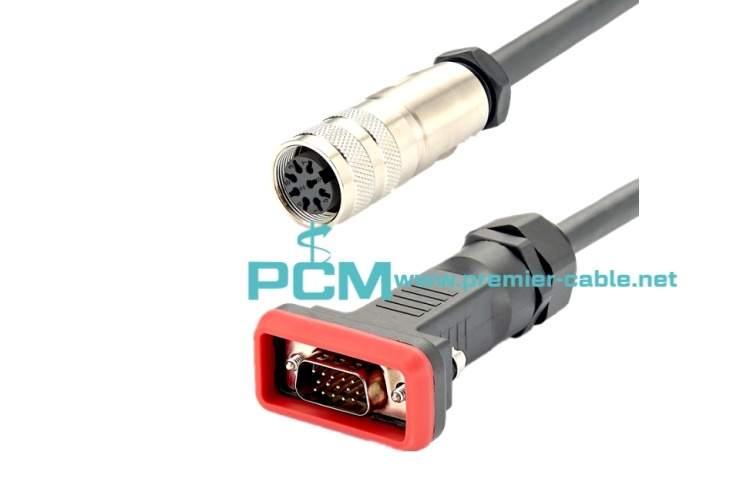
Microwave radio transmissions are commonly used in point-to-point communication systems on the Earth's surface, satellite communications, and deep space radio communications. Other parts of the microwave radio band are used for radar, radio navigation systems, sensor systems and radio astronomy.
The next higher band of the radio spectrum (between 30 GHz and 300 GHz) is called "millimeter waves" because they have wavelengths ranging from 10 mm to 1 mm. Radio waves in this frequency band are strongly attenuated by gases in the atmosphere. This limits their practical transmission distance to a few kilometers, so these frequencies cannot be used for long-distance communication. The electronics required for mmWave bands also developed earlier than those for microwave bands.
Wireless transmission of information
One-way and two-way telecommunications using communication satellites
Terrestrial microwave relay links in telecommunications networks, including backbone or backhaul carriers in cellular networks
More recently, microwaves have been used for wireless power transfer.
Whatever AISG cable solution you may need, our expert team will endeavour to supply it. From low loss cable to cryogenic cable to semi-rigid, we offer both off-the-shelf product and custom design. Our cable assemblies are high-quality and competitive so that we can guarantee the best product and service for our customers.


Related News
10M Quad MATE-AX & HFM Mini FAKRA 4-in-1 Cable Assemblies Now Available – Stock Ready, No MOQ
The 10M Quad MATE-AX & HFM Mini FAKRA 4-in-1 Cable Assemblies is ideal for connecting cameras, sensors, radar modules, area controllers, and domain control units in modern vehicles, buses, coaches, passenger buses, trucks, and commercial transportation systems.
7/8" Power Cable Solution for AGV and AMR Robotics Applications
Premier Cable’s DeviceNet 7/8" power cables for AGV and AMR robots, deliver the stability, durability, and flexibility required for next-generation robotic systems. Start Your Custom Cable Project Today! Get reliable power solutions for your AGV or AMR system!
GMSL Camera Cables Solution for Automotive In-Vehicle Developer System and Robotic
Looking for reliable and customizable GMSL camera cables? Premier Cable provide GMSL, GMSL2, and GMSL3 camera cable with Fakra and Quad Fakra, customizable for NVIDIA DRIVE AGX Thor Developer Kit, automotive, unmanned vehicles, robotics, AMR, and smart cities.
Premier Cable MATE-AX & H-MTD GMSL Ethernet Cable for NVIDIA DRIVE AGX Thor Developer Kit
Premier Cable provide custom MATE-AX & H-MTD breakout cables for NVIDIA DRIVE AGX Thor, supporting humanoid robots, machine vision, Industrial Vehicles, Robotics, and Autonomous Machines.
How H-MTD Cable Empower Robotaxi and Autonomous Driving Systems
H-MTD cable assemblies enable high-speed automotive Ethernet for Robotaxi, supporting cameras, LiDAR, and ADAS with customizable solutions.
Premier Cable Launches TE 282762-1 2 Way Automotive Cable Assembly
Premier Cable introduces the TE 282762-1 AMP Junior Power Timer automotive wiring harness, customizable, and widely used in sensors, fuel injection, ignition systems, and turn signals.