 Esperanto
 Shqiptare
 Euskara
 Zulu
 Latinus
 Cymraeg
 தமிழ்
 Slovak
 Slovak
 Afrikaans

News Center
How does RS-485 compare to RS-232 and 232-C interfaces ?
Publish:
2022-07-04 12:54
Source:
www.premier-cable.net
How does RS-485 compare to RS-232 and 232-C interfaces ?
1. What is RS-232 interface?
(1) The history and role of RS-232
In serial communication, both sides of the communication are required to adopt a standard interface, so that different devices can be easily connected for communication. RS-232-C interface (also known as EIA RS-232-C) is the most commonly used serial communication interface. (The "-C" in "RS-232-C" just means the version of RS-232, so it is the same as "RS-232") It was jointly developed by the American Electronics Industry Association (EIA) in 1970 with Bell A standard for serial communications developed by system, modem manufacturers, and computer terminal manufacturers. Its full name is "Serial Binary Data Exchange Interface Technical Standard between Data Terminal Equipment (DTE) and Data Communication Equipment (DCE)". The signal content of each pin is specified, and the level of various signals is also specified. Later, IBM's PC simplified RS-232 into a DB-9 connector, which became the de facto standard. The RS-232 port of industrial control generally only uses three lines of RXD, TXD and GND.
(2) Electrical characteristics of RS-232 interface
The voltage of any signal line in RS-232-C is negative logic relationship. That is: logic "1" is -3 to -15V; logic "0"
is +3 to +15V. The signal content of the 9 most commonly used leads of RS-232-C is as follows
DB-9 1 2 3 4 5 6 7 8 9
DB-25 8 3 2 20 7 6 4 5 22
Define DCD RXD TXD DTR GND DSR RTS CTS RI
(3) Physical structure of RS-232 interface
The RS-232-C interface connector generally uses a DB-9 plug socket, usually the plug is at the DCE end, and the socket is at the DTE end.
The RS-232 port of the PC is a 9-pin socket. The RS-232 interface that some devices connect with PC, because they do not use the other party's transmission control signal, only need three interface lines, namely "transmit data TXD", "receive data RXD" and "signal ground GND". RS-232 transmission line adopts shielded twisted pair.
(4) RS-232 transmission cable length
According to the RS-232C standard, when the symbol distortion is less than 4%, the length of the transmission cable should be 50 feet. In fact, this 4% symbol distortion is very conservative. In practical applications, about 99% of users are It works according to the range of symbol distortion 10-20%, so the maximum distance in actual use will be far more than 50 feet. The US DEC company has stipulated that the symbol distortion is allowed to be 10% and the following experimental results are obtained. The No. 1 cable is a shielded cable, the model is DECP. NO. There are three pairs of twisted pairs in 9107723, each pair is composed of 22# AWG, which is covered with shielding net. Cable 2 is the unshielded cable. The model is DECP. NO. 9105856-04 is a four-core cable of 22#AWG.
DEC's experimental results
Baud rate bps No. 1 cable transmission distance (m) No. 2 cable transmission distance (m)
110 1500 900
300 1500 900
1200 900 900
2400 300 150
4800 300 75
9600 75 75
After many years of improvement of RS-232 devices and communication technology, the communication distance of RS-232 has been greatly increased. The RS-232 booster of Boss Electronics can directly extend the communication distance of the ordinary RS-232 port to 1000 meters.
2. What is the RS-485 interface ?
1. Electrical characteristics of RS-485: Transmitter: Logic "1" is represented by the voltage difference between two lines as + (2 to 6) V; logic "0" is represented by the voltage difference between the two lines as - (2 to 6) V express. Receiver: A is more than 200mV higher than B, it is considered to be a logic "1", and A is more than 200mV lower than B, it is considered a logic "0".
2. RS-485 (or RS-422) wiring:
3. The maximum data transmission rate of RS-485 is 10Mbps. But because RS-485 often has to communicate with the RS-232 port of the PC, it is generally up to 115.2Kbps in fact. And because the too high rate will reduce the transmission distance of RS-485, it is often about 9600bps or below.
4. The RS-485 interface is a combination of a balanced driver and a differential receiver, with good anti-noise interference.
5. The standard value of the maximum transmission distance of the RS-485 interface is 1200 meters (at 9600bps), and it can actually reach 3000 meters. The RS-485 interface allows up to 128 transceivers to be connected on the bus, that is, RS-485 has multi-computer communication. capability, so that users can easily establish a device network using a single RS-485 interface. Because the RS-485 interface has good anti-noise interference, long transmission distance and multi-station capability, it becomes the preferred serial interface. Because the half-duplex network composed of the RS485 interface generally only needs two signal lines, the RS485 interface adopts the shielded twisted pair transmission. The international standard of RS-485 does not stipulate the interface connector standard of RS485, so it is possible to use terminal blocks or connectors such as DB-9 and DB-25. The RS-485 interface is the de facto industry standard.
6. When using the RS485 interface, how to consider the length of the transmission cable?
Answer: When using the RS485 interface, for a specific transmission line, the maximum cable length allowed for data signal transmission from the generator to the load is a function of the data signal rate. This length data is mainly limited by signal distortion and noise. . The relationship between the maximum cable length and the signal rate is obtained by using a 24AWG copper core twisted pair telephone cable (wire diameter is 0.51mm), the bypass capacitance between the lines is 52.5PF/M, and the terminal load resistance is 100 ohms. (Quoted from Appendix A of GB11014-89). When the data signal rate is reduced to below 90Kbit/S, assuming that the maximum allowable signal loss is 6dBV, the cable length is limited to 1200M. In fact, it is practically possible to obtain longer cable lengths than this. When using cables of different wire diameters. Then the maximum cable lengths achieved are not the same. For example: when the data signal rate is 600Kbit/S, 24AWG cable is used, and the maximum cable length is 200m. If 19AWG cable (wire diameter is 0.91mm) is used, the cable length can be greater than 200m; if 28AWG cable (wire diameter is 0.91mm) is used 0.32mm), the cable length can only be less than 200m. It is recommended to use shielded cable for long-distance communication of RS-485, and use the shielding layer as the ground wire.
3. What is RS-422 interface ?
The electrical performance of RS-422 is exactly the same as that of RS-485. The main differences are:
RS-422 has 4 signal lines: two for sending (Y, Z) and two for receiving (A, B). Since the RS-422 receiving and sending are separate, it can receive and send at the same time (full duplex).
RS-485 has 2 signal lines: A and B for transmit and receive. Since RS-485's receiving and sending share two lines, it cannot receive and send at the same time (half-duplex).
Is it possible to short-circuit Y-A of RS-422 as A of RS-485, and short-circuit Z-B of RS-422 as B of RS-485?
Answer: Not necessarily.
The condition is that RS-422 must be able to support multi-machine communication. The RS-422 ports of all interface converters of Boss Electronics can support full-duplex multi-machine communication, so it can be easily converted to RS-485.
4. What are the characteristics of RS-485, RS-232 and 232-C interfaces?
Answer: Since the RS-232 interface standard appeared earlier, it is inevitable that there are shortcomings, mainly in the following four points:
(1) The signal level of the interface is high, which is easy to damage the chip of the interface circuit, and because it is incompatible with the TTL level, a level conversion circuit is required to connect with the TTL circuit.
(2) The transmission rate is low, in the asynchronous transmission, the baud rate is 20Kbps. Now, the baud rate reaches 115.2Kbps due to the adoption of new UART chips such as 16C550.
(3) The interface uses a signal line and a signal return line to form a common ground transmission form. This common ground transmission is prone to common mode interference, so the anti-noise interference is weak.
(4) The transmission distance is limited. The maximum transmission distance standard value is 50 meters, but in fact, it can only be used in about 15 meters.
(5) RS-232 only allows one-to-one communication, while the RS-485 interface allows up to 128 transceivers to be connected on the bus.
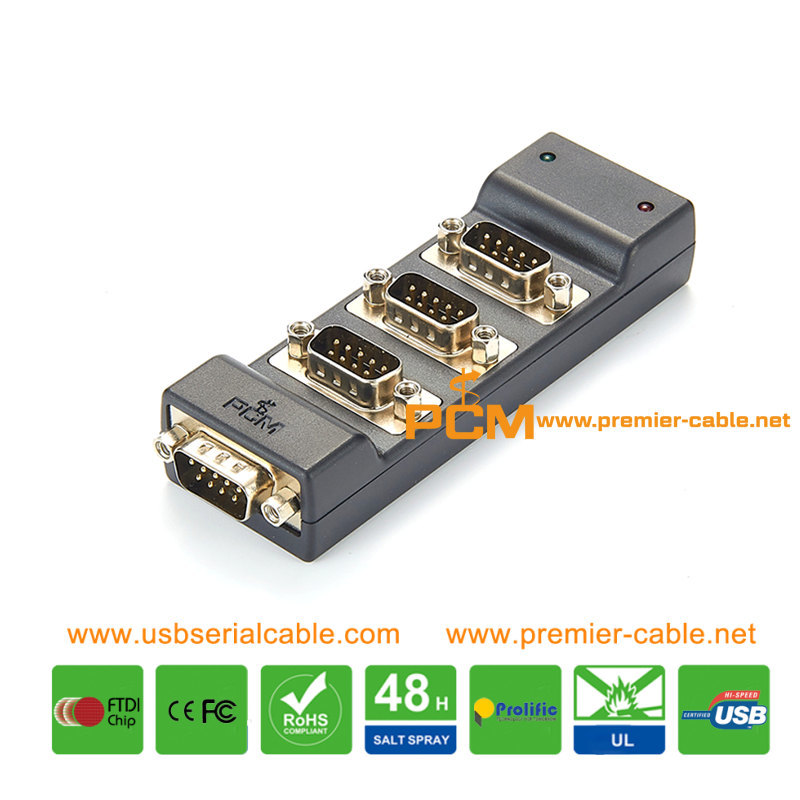
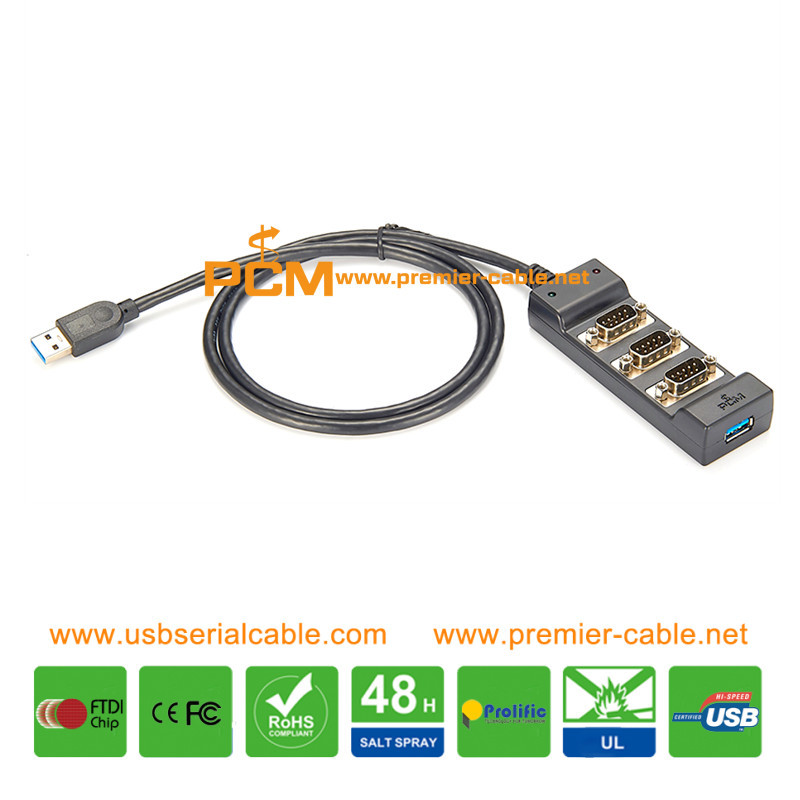
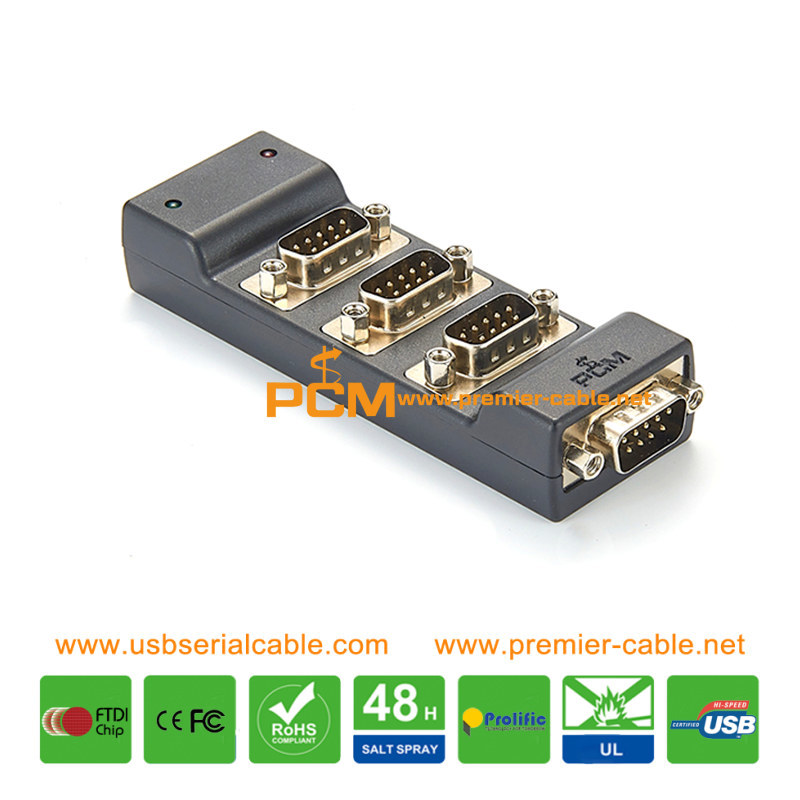
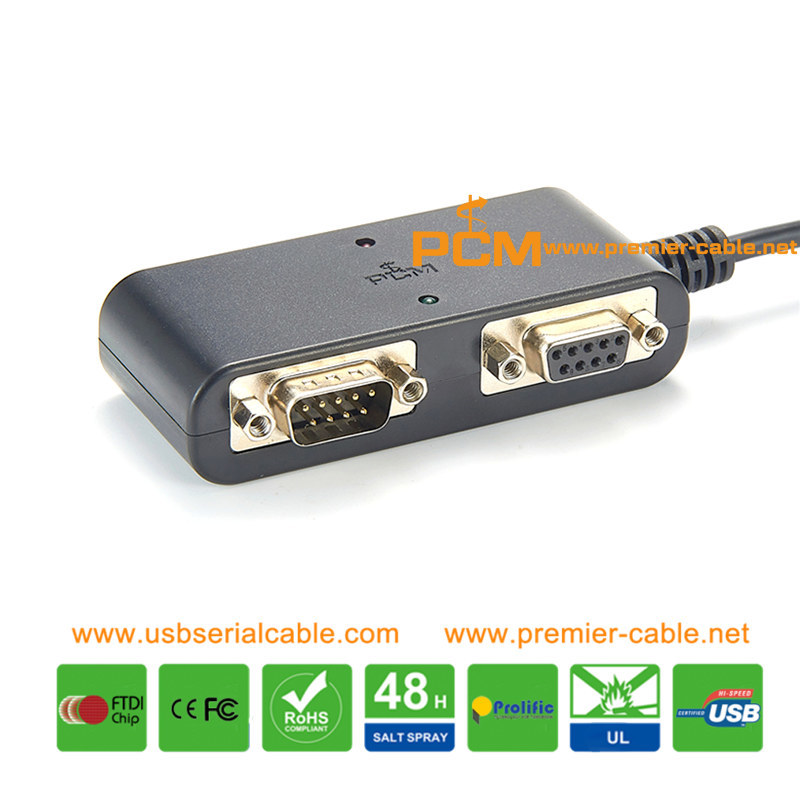
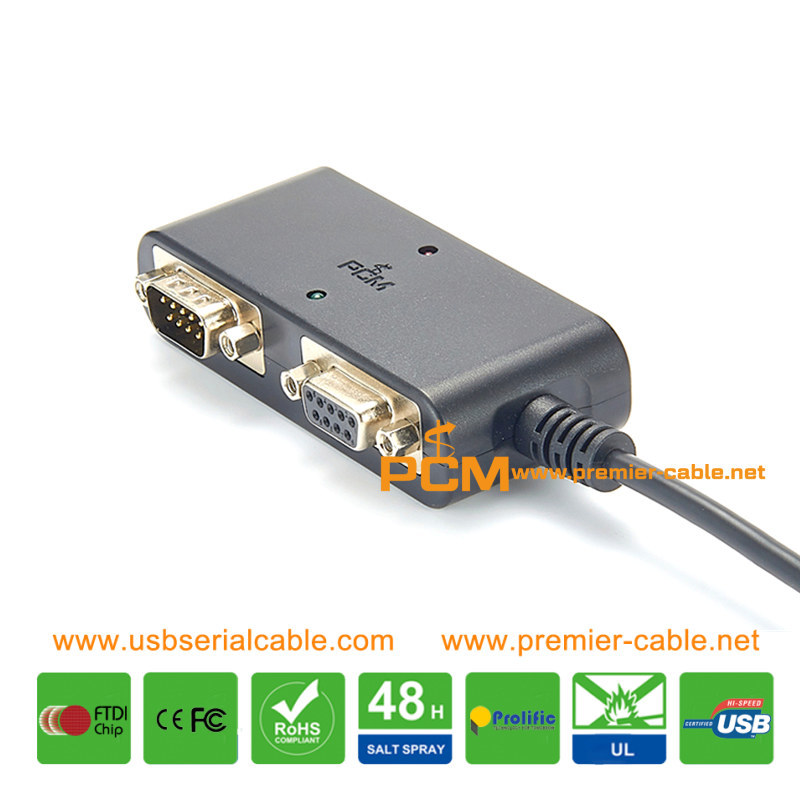
(6) The RS485 hubs produced by Premier Cable can divide one RS-485 or one RS-232 bus into four RS-485 buses, or collect four RS-485 signals into one RS-485 or one RS-485 bus. 232 bus up.
And each port has independent optical isolation, short circuit, open circuit protection functions. When the system fails, the built-in controller can cut off the faulty port in time.
Make the RS485 hub ensure that each port can work independently to achieve the effect of non-interference. Each port can connect 32 contacts at the same time, can extend 1200 meters RS-485 signal, it is the best choice to change the single structure in RS-485 bus wiring.
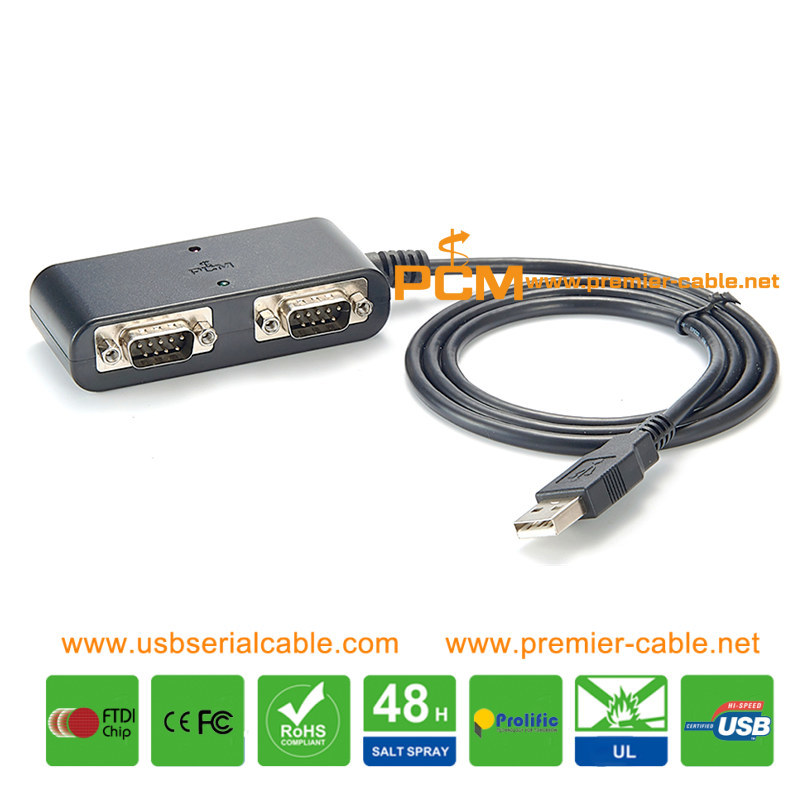
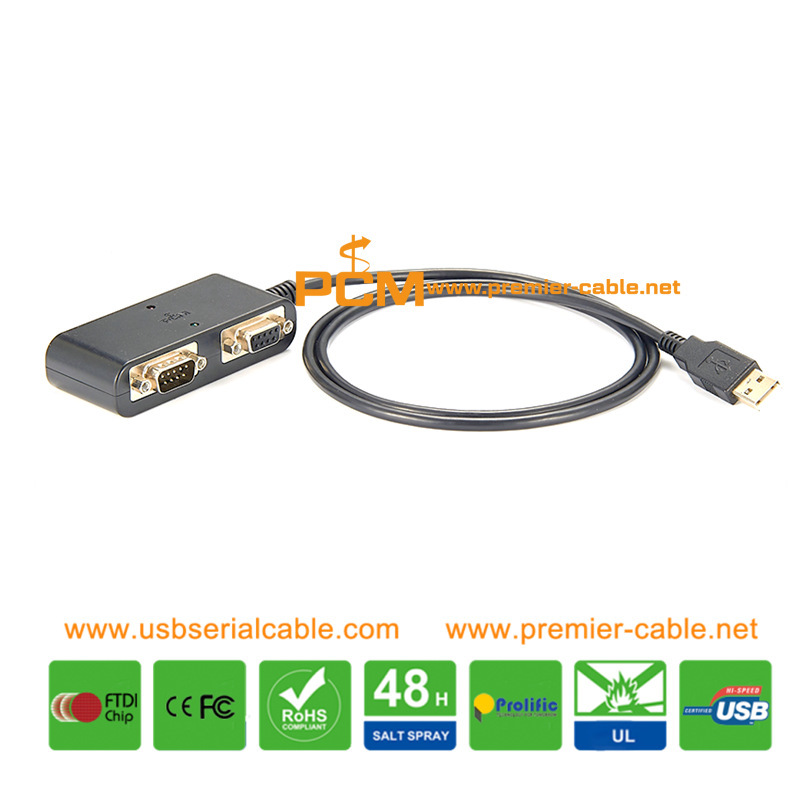
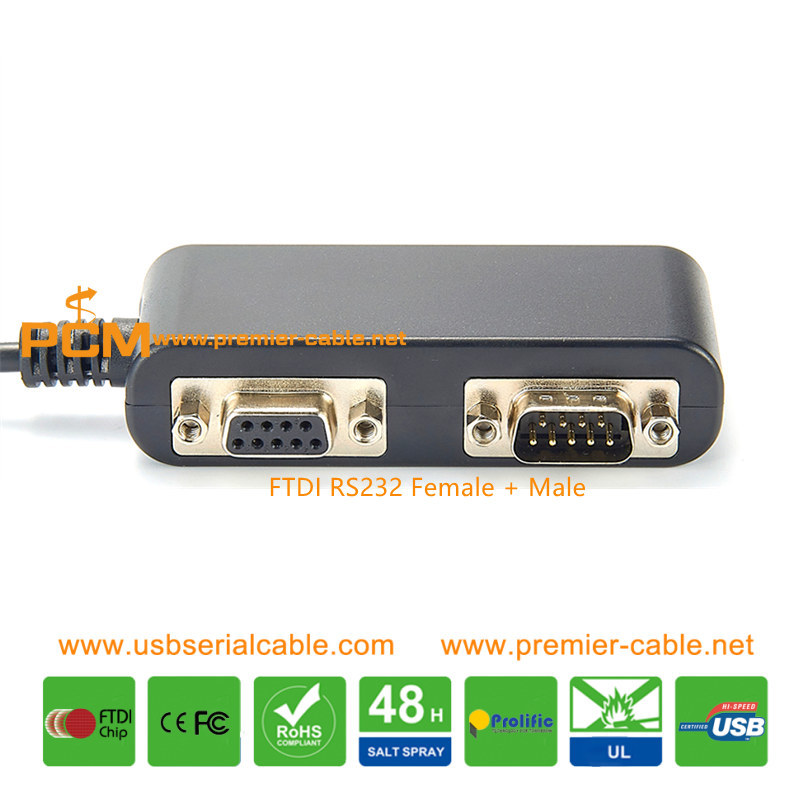
Premier Cable make a lot of RS485 Hubs, you can see from below link for all the RS485 Multi-Port Hubs, like RS485 Hub single port, RS485 Hub dual port, RS485 Hub 3 port, RS485 Hub 4 port
https://www.usbserialcable.com/product/44
https://www.premier-cable.net/product/USB-to-RS232-RS485-Cable-34
RS485 Hub
4-Port RS-485 Hub
RS485 Multi-Port Hub
Isolated RS485 4-Port Hub
Industrial RS485 Opto-Isolated Hub
RS-232/ RS-485 to RS-485 Hub 2 Port
Isolated bidirectional 4 port RS485 Hub
4 Port Serial Hub USB to RS485 Hub
Tel : 0086-0139-2949-7934
Skype : james198585
Email : James@premier-cable.net
Email : sales@premier-cable-mfg.com
Related News
10M Quad MATE-AX & HFM Mini FAKRA 4-in-1 Cable Assemblies Now Available – Stock Ready, No MOQ
The 10M Quad MATE-AX & HFM Mini FAKRA 4-in-1 Cable Assemblies is ideal for connecting cameras, sensors, radar modules, area controllers, and domain control units in modern vehicles, buses, coaches, passenger buses, trucks, and commercial transportation systems.
7/8" Power Cable Solution for AGV and AMR Robotics Applications
Premier Cable’s DeviceNet 7/8" power cables for AGV and AMR robots, deliver the stability, durability, and flexibility required for next-generation robotic systems. Start Your Custom Cable Project Today! Get reliable power solutions for your AGV or AMR system!
GMSL Camera Cables Solution for Automotive In-Vehicle Developer System and Robotic
Looking for reliable and customizable GMSL camera cables? Premier Cable provide GMSL, GMSL2, and GMSL3 camera cable with Fakra and Quad Fakra, customizable for NVIDIA DRIVE AGX Thor Developer Kit, automotive, unmanned vehicles, robotics, AMR, and smart cities.
Premier Cable MATE-AX & H-MTD GMSL Ethernet Cable for NVIDIA DRIVE AGX Thor Developer Kit
Premier Cable provide custom MATE-AX & H-MTD breakout cables for NVIDIA DRIVE AGX Thor, supporting humanoid robots, machine vision, Industrial Vehicles, Robotics, and Autonomous Machines.
How H-MTD Cable Empower Robotaxi and Autonomous Driving Systems
H-MTD cable assemblies enable high-speed automotive Ethernet for Robotaxi, supporting cameras, LiDAR, and ADAS with customizable solutions.
Premier Cable Launches TE 282762-1 2 Way Automotive Cable Assembly
Premier Cable introduces the TE 282762-1 AMP Junior Power Timer automotive wiring harness, customizable, and widely used in sensors, fuel injection, ignition systems, and turn signals.