 Esperanto
 Shqiptare
 Euskara
 Zulu
Zulu
 Latinus
 Cymraeg
 தமிழ்
தமிழ்
 Slovak
 Slovak
 Afrikaans

News Center
What is a Baseband Unit?
Publish:
2023-07-14 17:12
Source:
www.premier-cable.net
A baseband unit (BBU) is a telecommunications network device used to process baseband signals. Baseband is the term used to describe the original frequency that is transmitted before modulation. A traditional radio access network (RAN) consists of a BBU connected to one or more remote radio units (RRUs) located near the antenna.
The baseband unit is responsible for communicating with the core network through the physical interface, while the remote radio unit performs the transmit and receive radio frequency functions. These two components are usually connected together by optical fibers.
Centralized functionality and fixed positioning at base station tower feet are two aspects of what 5G is redefining the meaning of a traditional BBU. Next-generation RAN architectures divide the BBU functionality into distributed units (DU) for real-time functions and centralized units (CU) for non-real-time functions such as radio resource control (RRC). Virtualization and disaggregation of 5G baseband units increases capacity and reduces latency.
What Does a Baseband Unit Do?
RAN is composed of baseband processing unit and radio frequency processing unit. The baseband unit acts as a centralized "hub" for the base station, handling uplink and downlink data traffic and controlling RRU functions. A traditional BBU contains a digital signal processor (DSP) to convert signals from analog to digital and vice versa.
Additional processing done by the baseband unit includes alarm monitoring and system clock manipulation for synchronization. The BBU also controls the transfer of user data, session management and mobility functions that define communication links between users.
Base station architecture initially placed the BBU and RRU on digital and radio racks within a cabinet or enclosure at the base of the cell tower. Base stations are connected to antennas by radio frequency cables, which are prone to loss and interference. The Common Public Radio Interface (CPRI) protocol, published in 2003, defines the transport and connectivity between the RRU and the BBU, allowing greater physical separation of these elements over the fronthaul link.
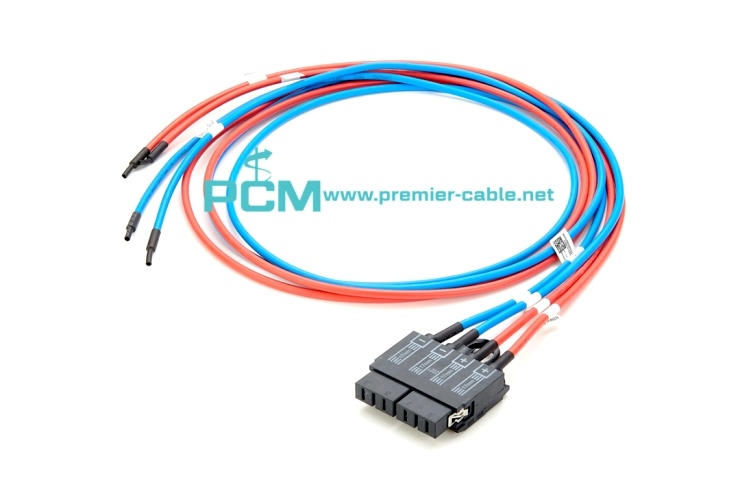
Premier Cable produce Huawei BBU Power Cable For Huawei 5900 For 5G, if you have any needs, feel free to contact us, sales03@premier-cable.net

Related News
10M Quad MATE-AX & HFM Mini FAKRA 4-in-1 Cable Assemblies Now Available – Stock Ready, No MOQ
The 10M Quad MATE-AX & HFM Mini FAKRA 4-in-1 Cable Assemblies is ideal for connecting cameras, sensors, radar modules, area controllers, and domain control units in modern vehicles, buses, coaches, passenger buses, trucks, and commercial transportation systems.
7/8" Power Cable Solution for AGV and AMR Robotics Applications
Premier Cable’s DeviceNet 7/8" power cables for AGV and AMR robots, deliver the stability, durability, and flexibility required for next-generation robotic systems. Start Your Custom Cable Project Today! Get reliable power solutions for your AGV or AMR system!
GMSL Camera Cables Solution for Automotive In-Vehicle Developer System and Robotic
Looking for reliable and customizable GMSL camera cables? Premier Cable provide GMSL, GMSL2, and GMSL3 camera cable with Fakra and Quad Fakra, customizable for NVIDIA DRIVE AGX Thor Developer Kit, automotive, unmanned vehicles, robotics, AMR, and smart cities.
Premier Cable MATE-AX & H-MTD GMSL Ethernet Cable for NVIDIA DRIVE AGX Thor Developer Kit
Premier Cable provide custom MATE-AX & H-MTD breakout cables for NVIDIA DRIVE AGX Thor, supporting humanoid robots, machine vision, Industrial Vehicles, Robotics, and Autonomous Machines.
How H-MTD Cable Empower Robotaxi and Autonomous Driving Systems
H-MTD cable assemblies enable high-speed automotive Ethernet for Robotaxi, supporting cameras, LiDAR, and ADAS with customizable solutions.
Premier Cable Launches TE 282762-1 2 Way Automotive Cable Assembly
Premier Cable introduces the TE 282762-1 AMP Junior Power Timer automotive wiring harness, customizable, and widely used in sensors, fuel injection, ignition systems, and turn signals.